
-
By All Round Lifting
-
8 February 2024
- 0 Comment
Mobile Crane Hire in Melbourne: How to Choose the Right Crane for Your Site
Choosing mobile crane hire in Melbourne isn’t about hiring the biggest crane available. It’s about matching the crane to the site constraints, lift requirements, and safety conditions specific to your project.
In a city defined by tight access, overhead services, and active worksites, the wrong crane choice creates delays, safety risks, and unnecessary cost.
“We can easily manage if we will only take, each day, the burden appointed to it. But the load will be too heavy for us if we carry yesterday’s burden over again today, and then add the burden of the morrow before we are required to bear it factorial non.”
Rebert Kosta
Start With the Site, Not the Load
Most crane hire decisions fail because they begin with load weight alone. In Melbourne, access and positioning matter just as much.
Before selecting a crane, assess:
Site access – driveway width, turning space, gate clearances
Ground conditions – finished slabs, basements, soft ground, weight limits
Surroundings – buildings, power lines, roads, footpaths
Lift location – indoors, rooftop, over structures, confined spaces
Working hours – business operations, noise restrictions, out-of-hours work
If any of these are restricted, standard mobile crane hire may not be suitable.
Common Mobile Crane Options Used Across Melbourne
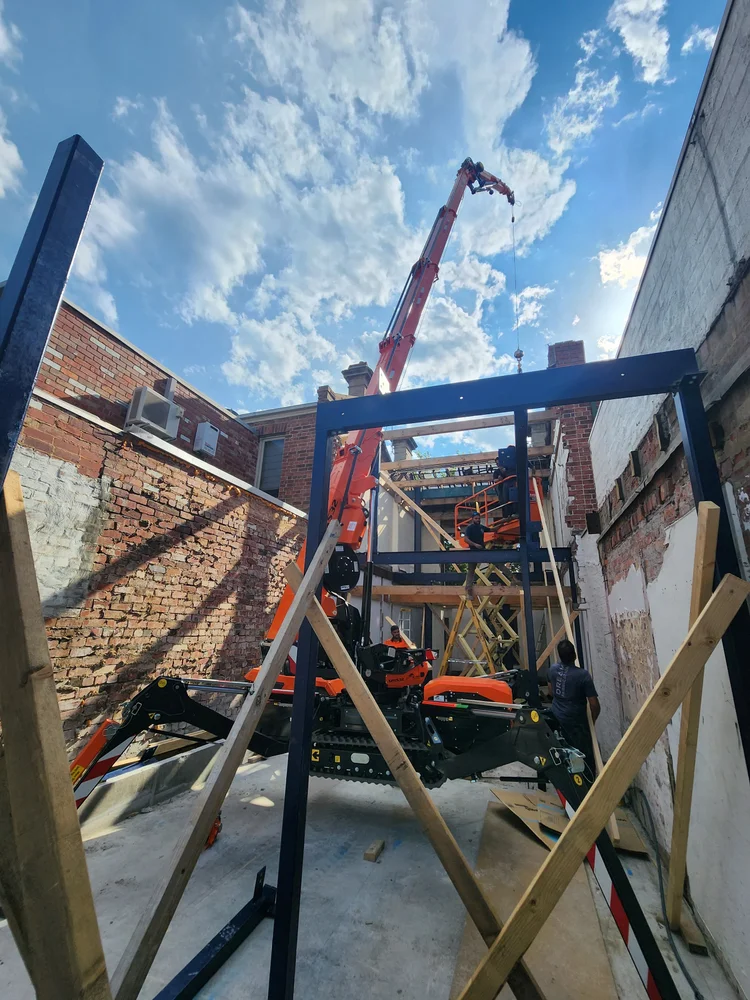
Mini Cranes for Tight or Internal Access – Mini crawler and spider cranes are used where:
Work must be completed inside buildings
Access is limited to doorways or narrow entries
Noise, emissions, or floor damage must be avoided
Electric mini cranes are commonly used in factories, food-grade facilities, glazing installs, and internal steel or machinery lifts.
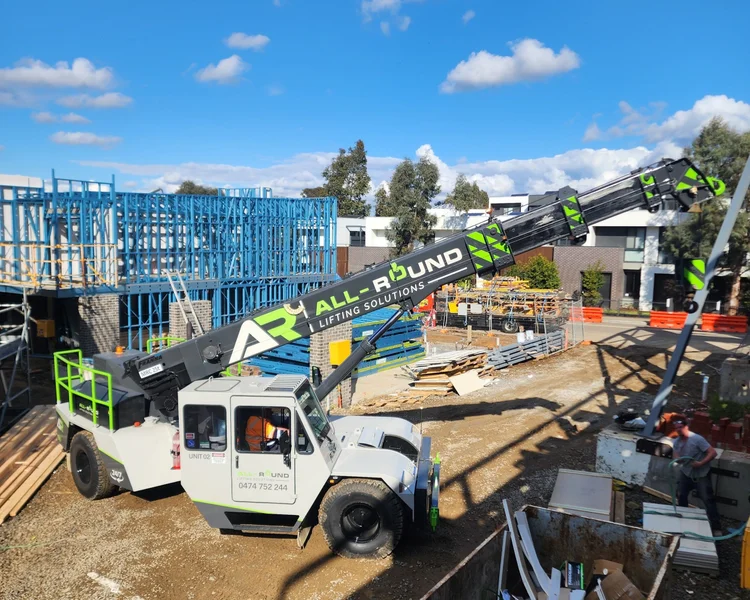
City Cranes for Urban Construction
City cranes—often referred to as “bubble cranes”—are designed for:
Narrow driveways and laneways
Inner-city residential and commercial sites
Lifting over houses or structures without occupying excessive space
Their compact footprint allows them to operate where larger slewing cranes cannot be positioned safely.
Pick-and-Carry Cranes for Site Movement
Pick-and-carry (Franna-style) cranes are suited to:
Moving heavy equipment across a site
Industrial relocations and machinery installs
Emergency or time-critical lifts
They are roadworthy, fast to deploy, and ideal where loads must be lifted and repositioned without setting outriggers.
Why Access Dictates Crane Choice in Melbourne
Melbourne worksites are increasingly constrained by:
Infill development
Existing infrastructure
Active public spaces
Limited staging areas
In these conditions, crane selection must prioritise:
Minimal setup footprint
Controlled lifting paths
Compliance with local safety and traffic requirements
Mobile crane hire that ignores these realities often results in aborted lifts or last-minute crane changes.
The Role of Planning in Mobile Crane Hire
Proper mobile crane hire includes more than equipment supply.
A compliant lift often requires:
Site inspections
Lift planning and risk assessments
Safe Work Method Statements (SWMS)
Electrical spotters for work near power lines
Traffic management where public areas are affected
In Melbourne, these requirements are common—not exceptional—and should be factored in before booking a crane.
When You Need More Than Standard Mobile Crane Hire
You’ll likely need a specialist mobile crane provider if:
The lift must occur indoors
Access cannot be modified
The site is surrounded by live services
Precision placement is critical
Downtime must be minimised
This is where a solutions-based approach becomes essential, not optional.
Final Thought
Mobile crane hire in Melbourne works best when the crane is selected after understanding the site—not before.
The right crane reduces setup time, avoids damage, and keeps lifts compliant and predictable. The wrong crane does the opposite.
If your project involves tight access, internal works, or urban constraints, crane selection should start with planning, not assumptions.